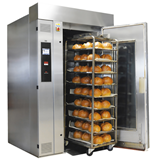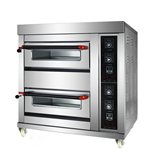


Key takeaways
- Retarder prover price (2026): $5,500-$25,000+ for reach-in to roll-in models; handles overnight retardation plus programmable multi-phase proving for any dough type.
- Prover deck oven combo price (2026): $8,000-$35,000+ for integrated units with a proving chamber below and 1-3 deck oven above; proves and bakes in one footprint.
- Primary decision factor: Whether you need overnight cold retardation (retarder prover) or same-day prove-and-bake in a single unit with no trolley transfer (prover deck oven).
- If you bake bread and pastry on overnight retard programs - a standalone retarder prover is the only option. Prover deck oven combos do not include refrigeration for cold retardation.
- If you need to prove and bake in the same footprint with no trolley handling - a prover deck oven combo eliminates the transfer step and saves 1-2 sqm of floor space.
- Floor space: A retarder prover plus separate deck oven requires 3-5 sqm; a prover deck oven combo requires 1.5-3 sqm for the same proving and baking capacity.
- Common mistake: Assuming a prover deck oven combo replaces a retarder prover. It does not - the combo unit provides warm proving only, not cold retardation or programmable overnight cycling.
Retarder prover vs prover deck oven: Which setup fits your bakery? (2026 comparison)
A retarder prover and a prover deck oven combo solve different production problems. A retarder prover holds dough at cold temperatures overnight and automatically transitions to warm proving on a timer - decoupling preparation from baking and eliminating early morning shifts. A prover deck oven combo stacks a warm proving chamber beneath a deck oven so dough proves and bakes in one vertical footprint with no trolley transfer - maximising floor space in small bakeries. Confusing the two leads to either a bakery that cannot do overnight retardation (prover deck combo) or a bakery that has two machines taking up floor space it does not have (standalone retarder prover plus separate oven).
This comparison puts both setups side by side on function, cost, floor space and production workflow for Australian bakeries. For detailed pricing on retarder provers, see the retarder prover cost guide. For prover deck oven specifications, see the prover deck oven buying guide. To compare pricing, get quotes for retarder provers or get quotes for deck ovens on HospitalityHub.
Operations where this comparison matters most:
- Small bakeries and patisseries with under 20 sqm of production space evaluating single-footprint options
- Cafes adding a bake-off program and choosing between overnight retard or same-day prove-and-bake
- In-store bakery departments in supermarkets with fixed bake-off schedules and limited back-of-house space
- Wholesale bakeries deciding whether to invest in separate or integrated proving and baking infrastructure
Compare the core differences
Before comparing costs, confirm which production model matches your baking schedule and floor plan.
Factor | Retarder Prover (Standalone) | Prover Deck Oven (Combo) |
|---|---|---|
Cold retardation |
Yes - holds dough at 2-4°C for 12-72 hours |
No - warm proving only (28-40°C) |
Programmable cycling |
3-7 phase programs (retard-hold-prove with timer) |
Basic prove timer only - no multi-phase scheduling |
Baking capability |
None - requires separate oven |
Integrated deck oven (1-3 decks) above the prover chamber |
Floor space (proving + baking) |
3-5 sqm for retarder prover + separate deck oven |
1.5-3 sqm for the combined unit |
Trolley transfer |
Required - move trays from prover to oven |
Eliminated - dough proves below and loads directly into the oven above |
Best for |
Bakeries using overnight retard programs, sourdough schedules, enriched dough programs |
Small bakeries, cafes and bake-off operations needing prove-and-bake in one footprint |
Retarder prover suits you if your production depends on overnight cold retardation to develop flavour, manage labour schedules or stage dough across staggered bake times. Sourdough, croissant and brioche programs all require the retard phase that only a retarder prover delivers.
Prover deck oven combo suits you if your bakery or cafe runs same-day prove-and-bake programs where dough is mixed, proved and baked within the same shift, and floor space is the primary constraint. The integrated footprint saves 1.5-2.5 sqm compared to separate units.
Evaluate the key specifications
With your production model confirmed, these are the specs that determine whether a specific unit meets your baking and proving requirements.
Specification | Typical Range | Buyer Consideration |
|---|---|---|
Prover capacity |
RP: 10-80+ trays; Combo: 6-16 trays |
Combo provers hold fewer trays than standalone units - confirm your peak batch size fits the prover chamber |
Oven temperature (combo) |
250-350°C (deck oven section) |
Adequate for bread and pastry. Not suitable for pizza requiring 400°C+ stone temperature |
Humidity (prover section) |
RP: active steam/atomiser; Combo: water tray or basic steam |
Combo units often have simpler humidity systems - confirm adequacy for enriched doughs |
Power supply |
RP: 15A single phase; Combo: 15A-32A or 3-phase |
Combo units draw more power due to the integrated oven - confirm your electrical supply handles both loads |
Unit weight |
RP: 100-250 kg; Combo: 300-700+ kg |
Combo units are heavy - confirm floor load capacity and delivery access before ordering |
Understand the full cost comparison (2026 prices)
The cost comparison is not just unit price - it includes the oven you will need separately if you choose a standalone retarder prover.
Cost Category | Retarder Prover + Separate Deck Oven | Prover Deck Oven Combo |
|---|---|---|
Purchase (new, mid-spec) |
$12,000-$25,000 (RP) + $8,000-$20,000 (oven) = $20,000-$45,000 |
$12,000-$35,000 (single integrated unit) |
Annual energy |
$1,500-$3,500 (both units combined) |
$1,000-$2,500 (single unit, shared insulation) |
Annual maintenance |
$600-$1,500 (both units) |
$400-$1,000 (single unit) |
Floor space required |
3-5 sqm |
1.5-3 sqm |
Labour saving (overnight retard) |
$12,000-$18,000/year (eliminates early shift) |
None - same-day proving requires staff present during the prove cycle |
A prover deck oven combo at $15,000-$30,000 costs less upfront and saves 1.5-2.5 sqm of floor space compared to buying a retarder prover ($12,000-$25,000) plus a separate deck oven ($8,000-$20,000). But it cannot do overnight retardation - so bakeries that depend on cold retard for flavour development, labour scheduling or multi-day dough programs must invest in the standalone pair. If you are within 4-6 weeks of purchasing, get quotes for retarder provers or get quotes for deck ovens from verified Australian suppliers.
Decision framework - retarder prover vs prover deck oven
Decision Factor | Choose Retarder Prover (Standalone) | Choose Prover Deck Oven (Combo) |
|---|---|---|
Overnight retardation needed |
Yes - cold retard is part of the production schedule |
No - same-day prove-and-bake only |
Dough types |
Sourdough, croissant, brioche, enriched breads requiring cold fermentation |
Standard bread, rolls, bake-off products that prove and bake in the same shift |
Floor space constraint |
3-5 sqm available for retarder prover + separate oven |
Under 3 sqm - combo saves 1.5-2.5 sqm |
Labour strategy |
Eliminate or reduce early morning shifts |
Staff present during proving and baking - no overnight automation |
Capital budget |
$20,000-$45,000 (RP + separate oven) |
$12,000-$35,000 (single integrated unit) |
Evaluate suppliers
You are ready to go to market. Use this checklist to assess each supplier against the same criteria.
Factor | What to Ask |
|---|---|
Retardation capability |
Does this unit support cold retardation? What is the minimum holding temperature? |
Prover capacity |
How many trays does the prover section hold? Does it accept my existing tray sizes? |
Oven performance |
What maximum temperature does the oven section reach? How many decks are included? |
Humidity system |
Is humidity control active or passive? Can it maintain 75-85% RH for enriched doughs? |
Power requirements |
What electrical supply does this unit require? Will my existing circuit handle it? |
Warranty |
What warranty period is offered? Are the compressor and oven elements covered separately? |
Service network |
Do you have technicians in my state for both refrigeration and oven components? |
Installation |
Is delivery, positioning and commissioning included? What are the floor load requirements? |
Lead time |
Is this model ex-stock in Australia or imported to order? |
Finance |
Do you offer lease, hire-to-own or equipment finance? |
Frequently asked questions
Can a prover deck oven combo replace a retarder prover?
No. Prover deck oven combos provide warm proving only (28-40°C). They do not include refrigeration for cold retardation, so bakeries that rely on overnight retard programs for flavour development or labour scheduling cannot substitute a combo unit.
Which option saves the most floor space?
A prover deck oven combo saves 1.5-2.5 sqm by stacking the prover below the oven in one footprint. For bakeries under 20 sqm with no overnight retard requirement, the combo is the space-efficient choice.
What is the labour saving from a standalone retarder prover?
A retarder prover that eliminates one early-morning shift at $25-$35/hour for 5-6 hours saves $12,000-$18,000/year. A prover deck oven combo does not provide this saving because same-day proving requires staff on site.
Can i add a retarder prover alongside a prover deck oven combo later?
Yes. Some bakeries start with a combo for same-day baking and add a retarder prover when they introduce sourdough or croissant programs. The combo continues handling bread and bake-off while the retarder prover manages overnight fermentation.
What compliance requirements apply to both equipment types in Australia?
Retarder provers must meet AS/NZS 60335.2.89 (commercial refrigerated cabinets). Deck ovens must meet AS/NZS 60335 (electrical safety) or AS/NZS 5601 (gas installation). Both require food-contact surfaces compliant with FSANZ Standard 3.2.3. Installation by licensed tradespeople is required for both.
What matters most
- Retarder provers handle overnight cold retardation and programmable multi-phase cycling - prover deck oven combos do not
- Prover deck oven combos save 1.5-2.5 sqm by integrating proving and baking in one footprint
- A standalone retarder prover saves $12,000-$18,000/year in early-morning labour - a combo unit does not
- Sourdough, croissant and brioche programs require cold retardation - only the standalone retarder prover delivers this
- Combined capital cost for retarder prover + separate oven ($20,000-$45,000) exceeds a combo ($12,000-$35,000) but offers more production flexibility
- Both equipment types are available from verified Australian suppliers on HospitalityHub
Most buyers shortlist 2-3 models after getting an initial quote.
Don't waste time contacting suppliers individually. HospitalityHub gives you direct access to verified Australian bakery equipment suppliers - where hospitality buyers request and compare multiple quotes so they can buy with confidence.
- Get quotes for retarder provers - contact multiple verified suppliers with a single enquiry
- Get quotes for deck ovens - compare models, decks and configurations
- Contact suppliers directly - speak to specialists who service your state
→ Get and compare retarder prover quotes now → https://www.hospitalityhub.com.au/buy/retarder-prover